MEDICAL DISCLAIMER: The information provided on OrthoLength Pro is for educational purposes only and does not substitute for professional medical advice. Always consult with a qualified orthopedic surgeon.
Posted on Sep 8, 2017, 12:20 am
#201

Since I am looking to do 4cm I should be fully recovered within around 7 months. I will need to see when to start arm lengthening.

Overdozer, have you seen other patients in Russia get arm lenghtening surgery? Is it common there?

Also are you worried about any sort of permanent damage? Someone people say humerus  lengthening is the most dangerous but then some say its the easiest. Just wanna know your thougjts since im sure you researched it properly before getting it.

Also, once fully recovered, is our arm usage the same as before? E.g punching, taking punches, driving etc.

Like (0)
Posted on Sep 8, 2017, 8:51 am
#202

Quote from: shawtydancer on September 08, 2017, 12:20:54 AMSince I am looking to do 4cm I should be fully recovered within around 7 months. I will need to see when to start arm lengthening.

Overdozer, have you seen other patients in Russia get arm lenghtening surgery? Is it common there?

Also are you worried about any sort of permanent damage? Someone people say humerus  lengthening is the most dangerous but then some say its the easiest. Just wanna know your thougjts since im sure you researched it properly before getting it.

Also, once fully recovered, is our arm usage the same as before? E.g punching, taking punches, driving etc.
Arm lengthening for cosmetic purposes is not common, no.

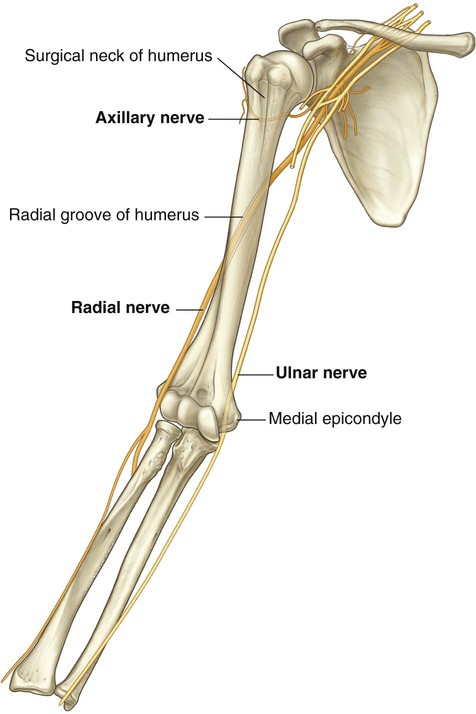
Arm (or hand? I think it's hand - https://www.ncbi.nlm.nih.gov/pmc/articles/PMC5367587/ ) paralysis is a possible complication during the surgery if you hit one of those nerves
One Step Closer - External tibias, femurs, humerus - Petersburg, Russia
If the surgery went fine you have nothing to worry about.


Can't comment on recovery yet, I still have frames on.

Like (0)
Posted on Sep 8, 2017, 6:00 pm
#203

Quote from: Overdozer on September 08, 2017, 08:51:04 AMArm lengthening for cosmetic purposes is not common, no.

Arm (or hand? I think it's hand - https://www.ncbi.nlm.nih.gov/pmc/articles/PMC5367587/ ) paralysis is a possible complication during the surgery if you hit one of those nerves
One Step Closer - External tibias, femurs, humerus - Petersburg, Russia
If the surgery went fine you have nothing to worry about.


Can't comment on recovery yet, I still have frames on.


Hmm i see. When i said common, i pretty much meant to ask 'have u seen other patients getting arm lengthening done during ur stay?'  If you could answer that i'd be greatful.

In terms of paralysis, what did your dr say about the possibility of it?  With every surgery there is a  possibility of extreme conplications, but if u have a good dr you should be fine. Pretty much what im trying to ask, are the chances of paralysis really small?

Like (0)
Posted on Sep 8, 2017, 6:44 pm
#204

Quote from: shawtydancer on September 08, 2017, 06:00:58 PMHmm i see. When i said common, i pretty much meant to ask 'have u seen other patients getting arm lengthening done during ur stay?'  If you could answer that i'd be greatful.
No.

QuoteIn terms of paralysis, what did your dr say about the possibility of it?  With every surgery there is a  possibility of extreme conplications, but if u have a good dr you should be fine. Pretty much what im trying to ask, are the chances of paralysis really small?
He warned me that hand paralysis is a possible and serious complication of AL. I didn't ask on the chances, I did assume they are low enough if he agreed to perform it on me.

Like (0)
Posted on Sep 8, 2017, 6:56 pm
#205

Hey Overdozer,

Hope your recovery is proceeding well.

Do you by any chance know if new soft tissue is created during LL around the bone in question, or is it simply stretched on a permanent basis?

If it is the latter, will you not suffer some kind of permanent pain/complications due to soft tissue with so much lengthening?

Like (0)
Posted on Sep 8, 2017, 7:42 pm
#206

Quote from: FDR101 on September 08, 2017, 06:56:39 PMDo you by any chance know if new soft tissue is created during LL around the bone in question, or is it simply stretched on a permanent basis?
For all I know
https://www.ncbi.nlm.nih.gov/pubmed/9167625
QuoteStudies of limb lengthening have demonstrated successful bone formation in the distraction gap. Failure of the muscle units to lengthen leads to many complications that significantly limit the success of this approach; it is, therefore, of paramount importance to characterize the behavior of the muscle during limb lengthening. In this study, tibiae of adult rabbits were lengthened for 10 days at a rate of 1 mm/day. The proliferative ability of the lengthened muscle was characterized using bromodeoxyuridine, a thymidine analogue that is incorporated during cell division, and desmin, a muscle-specific marker. We observed a large number of proliferating cells, specifically in the lengthened muscle, that were co-localized with many desmin-positive cells. The presence of bromodeoxyuridine nuclei inside desmin-positive muscle fibers suggests that limb lengthening promotes muscle growth by triggering myoblast proliferation and fusion into the lengthened muscle. Our findings are consistent with those of other studies in the reviewed literature that also suggest that limb lengthening promotes muscle growth.
https://www.ncbi.nlm.nih.gov/pubmed/10672601
QuoteExperimental animal studies and clinical investigations show three processes going on during extremity lengthening with the Ilizarov-method. At first degenerative changes including cell necroses in the muscles, the nerves and the tendons [corrected] occur as well as denervation of muscle fibers resulting in neurogenous muscle atrophies. These alterations are followed by reperative and regenerative processes as well as the reinnervation of the denervated muscle fibers. Secondly histoneogenesis occur which leads to a high increase of tissue-specific cells and a growth of the muscles, tendons and vessels. Therefore tensile-stress is an important factor of tissue growth. Thirdly adaptive processes proceed during leg lengthening. For example the high biosynthetic activity during tissue growth seems to indicate an increase of vasa vasorum.
https://www.ncbi.nlm.nih.gov/pubmed/23049683
QuoteSkeletal muscle responds to passive overstretch through sarcomerogenesis, the creation and serial deposition of new sarcomere units. Sarcomerogenesis is critical to muscle function: It gradually re-positions the muscle back into its optimal operating regime. Animal models of immobilization, limb lengthening, and tendon transfer have provided significant insight into muscle adaptation in vivo. Yet, to date, there is no mathematical model that allows us to predict how skeletal muscle adapts to mechanical stretch in silico. Here we propose a novel mechanistic model for chronic longitudinal muscle growth in response to passive mechanical stretch. We characterize growth through a single scalar-valued internal variable, the serial sarcomere number. Sarcomerogenesis, the evolution of this variable, is driven by the elastic mechanical stretch. To analyze realistic three-dimensional muscle geometries, we embed our model into a nonlinear finite element framework. In a chronic limb lengthening study with a muscle stretch of 1.14, the model predicts an acute sarcomere lengthening from 3.09[Formula: see text]m to 3.51[Formula: see text]m, and a chronic gradual return to the initial sarcomere length within two weeks. Compared to the experiment, the acute model error was 0.00% by design of the model; the chronic model error was 2.13%, which lies within the rage of the experimental standard deviation. Our model explains, from a mechanistic point of view, why gradual multi-step muscle lengthening is less invasive than single-step lengthening. It also explains regional variations in sarcomere length, shorter close to and longer away from the muscle-tendon interface. Once calibrated with a richer data set, our model may help surgeons to prevent muscle overstretch and make informed decisions about optimal stretch increments, stretch timing, and stretch amplitudes. We anticipate our study to open new avenues in orthopedic and reconstructive surgery and enhance treatment for patients with ill proportioned limbs, tendon lengthening, tendon transfer, tendon tear, and chronically retracted muscles.
You can use google scholar to find more articles.
Like (0)
Posted on Sep 8, 2017, 10:57 pm
#207

LL promotes soft tissue growth in which completely new cells of muscle, etc. are formed. It's not only stretched tissue. However, the newly created tissue is still inferior to soft tissue naturally grown during puberty.

Like (0)
Posted on Sep 8, 2017, 11:07 pm
#208

Quote from: IwannaBeTaller on September 08, 2017, 10:57:39 PMLL promotes soft tissue growth in which completely new cells of muscle, etc. are formed. It's not only stretched tissue. However, the newly created tissue is still inferior to soft tissue naturally grown during puberty.

are you sure about that? Where did you read this?

Like (0)
Posted on Sep 9, 2017, 12:16 am
#209

Quote from: Overdozer on September 08, 2017, 06:44:46 PMNo.
He warned me that hand paralysis is a possible and serious complication of AL. I didn't ask on the chances, I did assume they are low enough if he agreed to perform it on me.

Thanks so much for the response man. Is it possible the next time you ask him, how common it is?

Like (0)
Posted on Sep 9, 2017, 8:39 am
#210

Quote from: TIBIKE200 on September 08, 2017, 11:07:13 PMare you sure about that? Where did you read this?

There was this study where animals' limbs where lengthened and they showed microscopic x-rays of the muscle tissue and you could see the damage.

Like (0)

You must be logged in to post a reply.

Related Topics